What Is Stainless Steel Jewelry? A Plain-English Explanation
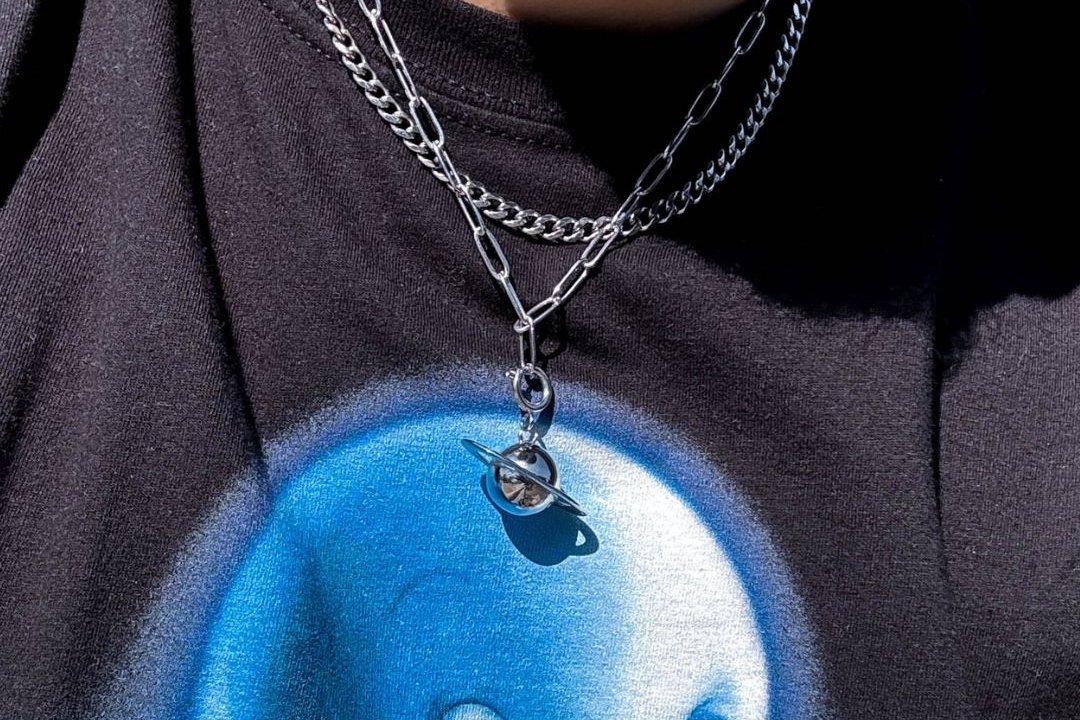
Stainless steel jewelry is jewelry made from a corrosion-resistant iron alloy — at least 10.5% chromium mixed into the metal, usually with nickel and a small amount of molybdenum. The chromium reacts with air to form an invisible oxide layer that protects the surface, which is why the material never rusts the way plain steel does and never turns your skin green the way low-grade brass does.
The rest is about grades, uses, and the trade-offs nobody mentions until after checkout.
The grades that matter
Not all stainless steel is equal. Two grades dominate jewelry:
316L, sometimes labeled “surgical steel,” carries molybdenum and low carbon. It resists salt, chlorine, and the mild acids in sweat better than anything else at the price. This is the grade behind quality stainless steel necklaces, piercings, and anything worn daily.
304 is the cheaper kitchen-grade alloy. Fine for a bracelet worn now and then; weaker against salt and chlorine over months. Sellers who don’t list a grade are usually selling 304.
430 is magnetic and used for the cheapest pieces. It can spot-rust where the surface is scratched. If a fridge magnet sticks to your necklace, you have your answer.
Where it came from
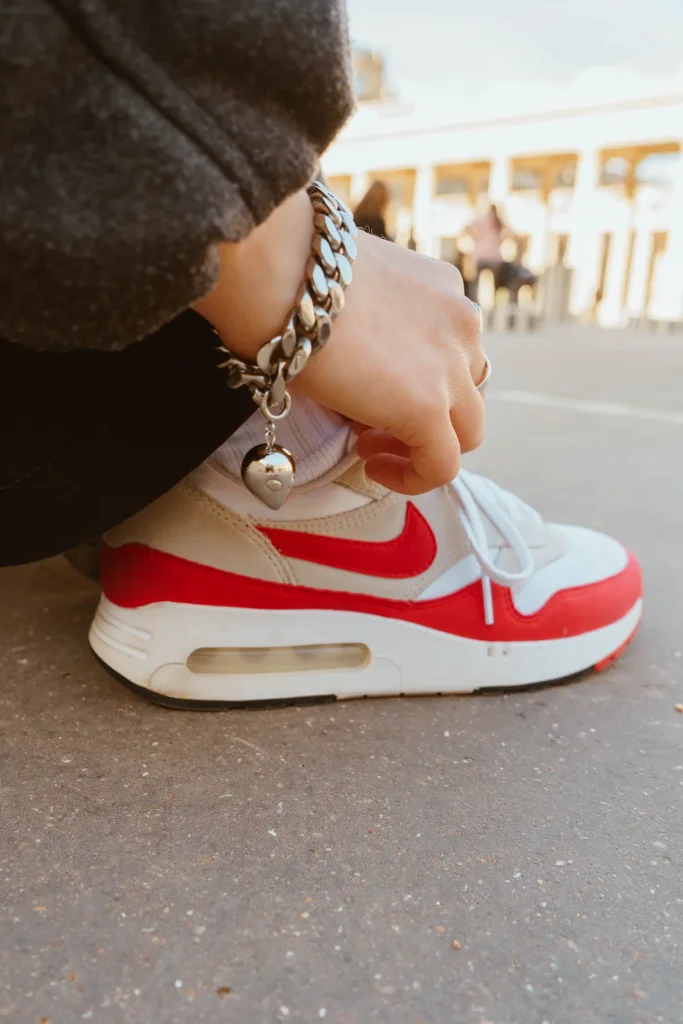
Steel entered jewelry through watch cases in the 1920s, then stayed in the men’s market for decades — dog tags, ID bracelets, biker rings. It went mainstream only in the last fifteen years, as fashion brands began selling steel chains at accessible prices. The material barely changes between a $10 listing and a $300 designer piece.
What it’s used for
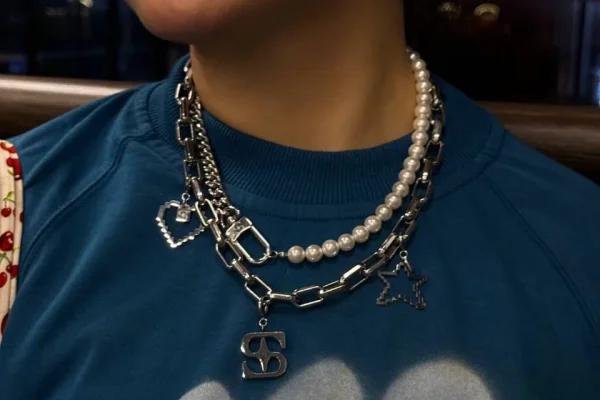
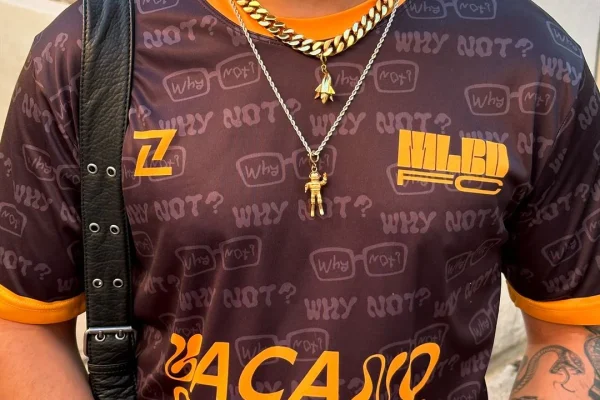
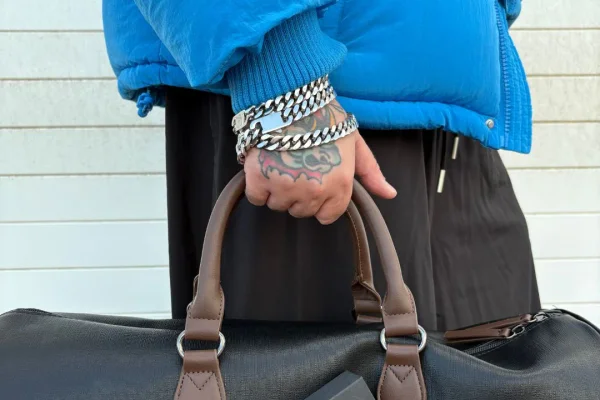
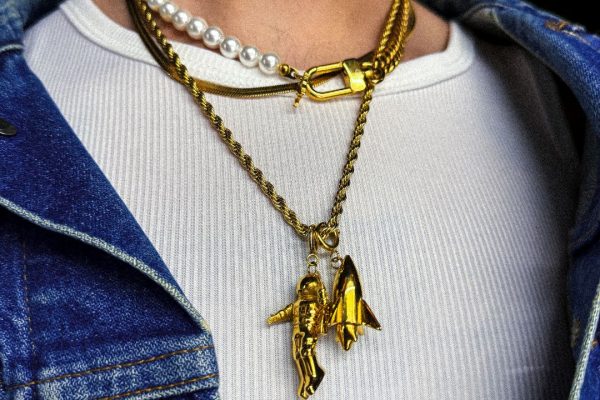
Chains lead the category — they live closest to skin and take the most abuse. Pendants come next, then rings, earrings, and piercings, where 316L is a common standard because it rarely irritates healing skin. Laser engraving cuts crisp lines into flat steel, which is why personalized pendants are largely a steel product.
The myths, cleared
It doesn’t turn skin green; that comes from copper in cheap alloys, and steel has none exposed. Steel is also harder than silver and gold, so it scratches less — though it can’t be reshaped once it bends.

The honest trade-offs
Steel has no resale value, most jewelers won’t repair it, and thin designs feel stiff. Gold-colored pieces are coated, and the coating — not the steel — wears first. None of this matters for daily-wear chains, which is what the material does best.
How to identify it, quickly
Quality pieces carry a stamp: 316L, 304, or “SSt.” The surface feels cooler than brass. Weight is moderate — lighter than silver, heavier than zinc-alloy junk. A chain priced like gold is either mislabeled or plated over something else.
So, what is stainless steel jewelry, in one line? The workhorse of modern accessories: a chromium-protected alloy that shrugs off water and sweat, costs a fraction of precious metals, and asks nothing from you except an occasional rinse.